

Modern air travel demands seamless, efficient, and consistent passenger experiences. When passenger numbers exceed 60 million each year, operational continuity and resilience emerge as equally critical considerations.
As part of a main terminal renovation, one major international airport undertook an upgrade to its baggage handling system to introduce improved efficiency and monitoring while enhancing customer experience.
Such a project demands collaboration, precision engineering and innovative problem-solving, so the airport and its partners sought the services of the global leaders in baggage handling solutions.
Formerly known as Glidepath, New Zealand’s Alstef Group is recognised as a global leader in the design and manufacture of baggage handling systems. The company was engaged to design and manufacture 140 world-class bag drop stations, within tight timeframes, and to ensure these units met the highest standards of performance, reliability, and aesthetics.
The project, which began in February 2024, called for not only technical excellence but also the ability to integrate front-of-house design seamlessly into the airport environment. Each bag drop had to endure heavy passenger throughput, constant abrasion from hard luggage and the varied demands of manned, unmanned and hybrid operation.
The goal was efficiency and uptime without compromise where every component, from the conveyor belts to the customer interface panels, had to perform flawlessly and consistently under immense operational pressure.
Smart partnerships
Early in the project, it became evident that fulfilling all the project outcomes would require a strategic partnership that could deliver assurances around product supply and smart manufacturing support at a larger scale.
“The order came through with a very tight budget and strict expectations,” explains Max Ramachchandran, Alstef Group’s project manager.
“Our initial internal estimates showed that using our traditional manufacturing approach would struggle to make the project viable, so we recognised the need to introduce expertise in areas that would free up our engineers to design and deliver the ambitious outcomes required,” he says.
Other airport systems, especially those utilised in the wider baggage handling system, were designed and built using hardware and software from global technology leader Siemens.
The bag drops would be no different, utilising Siemens’ technology to deliver the very best integration and operational performance. This made Siemens’ New Zealand distribution partner, Cuthbert Stewart Limited (CSL) the obvious first port of call in the pursuit of project efficiency.
“We invited CSL to come and get an overview of the project, knowing that they’d give us assurance of product supply and access to their and Siemens automation experts. What we didn’t realise is that they would bring so much more to the table by way of smart manufacturing and the capabilities to help us scale-up production to the necessary levels,” says Ramachchandran.
With more than 75 years’ experience in product and technology distribution, CSL was able to offer immediate product supply assurance and support to Alstef Group.
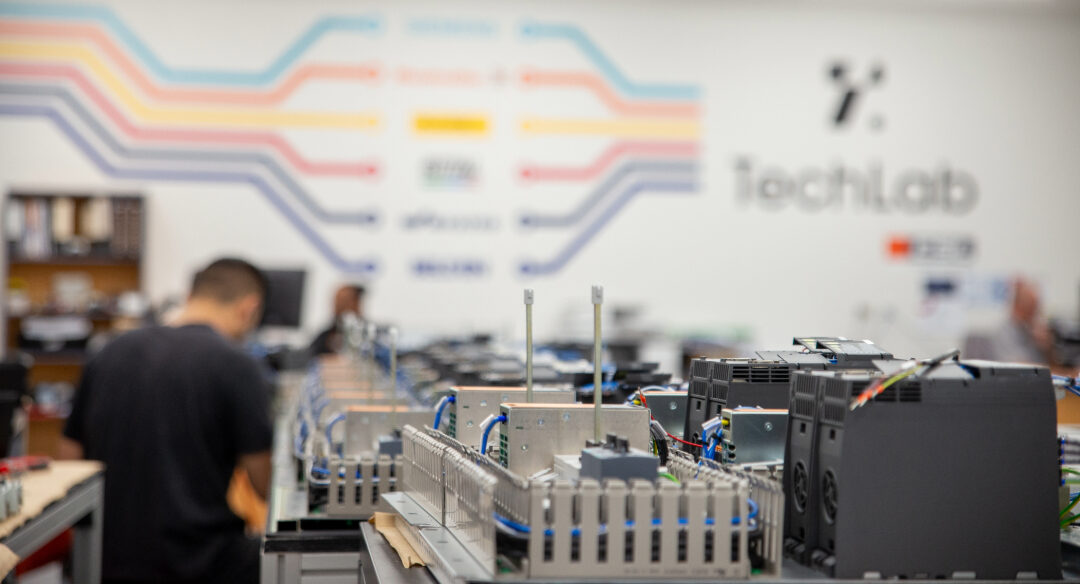
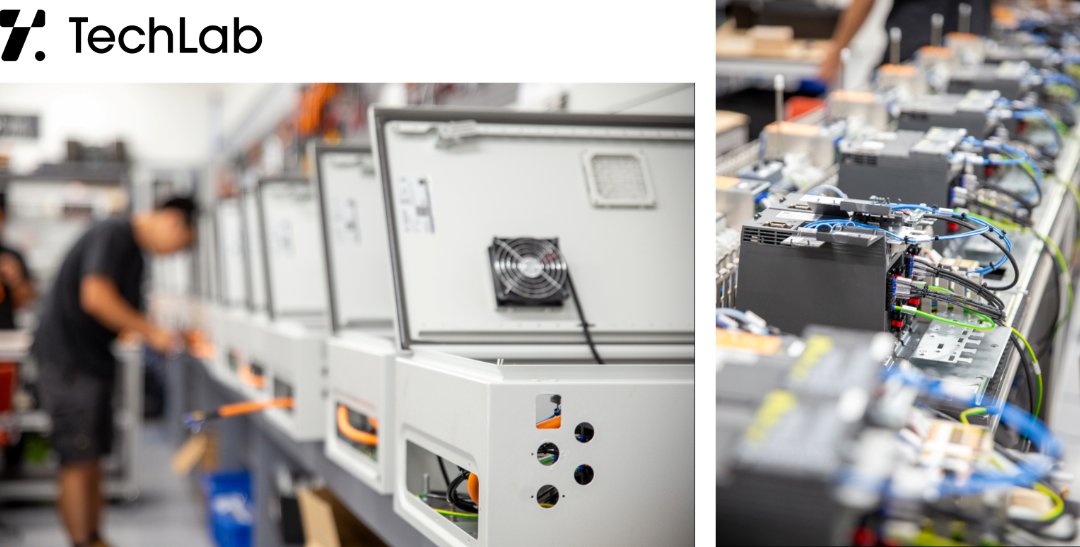
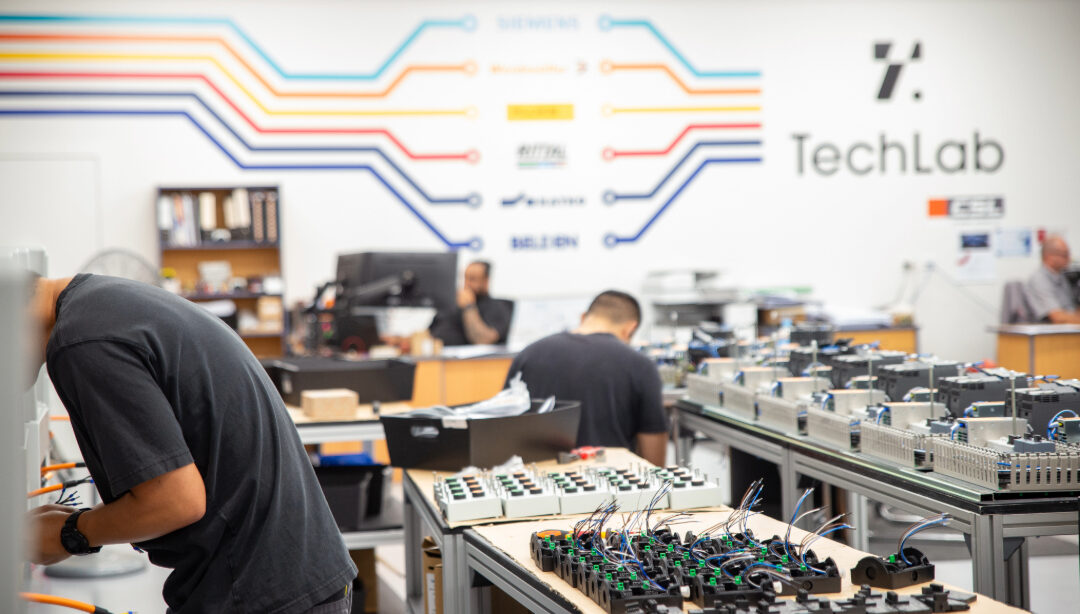
Furthermore, CSL’s TechLab Engineering Centre offered exactly what Alstef Group needed by way of the tools, resources, man-power and smart manufacturing techniques to deliver the efficiencies and reduced project overheads.
Project optimisation
CSL’s Product Marketing Manager for Automation & Software Sam Siddawi says that as soon as the team from Alstef took him through the project he could immediately see ways in which CSL could not only deliver assurance of satisfying all project requirement within the timeframe but also deliver a more favourable budgetary approach.
“Once we understood the design and operational requirements, the supply of equipment was an easy challenge to overcome. We took an end-to-end perspective of the project’s complexity, identifying potential challenges and bottlenecks and how best to mitigate them,” he says
CSL’s involvement enabled a complete reassessment of design and cost structure, beginning with digitalization through Rittal’s ePLAN software.
The teams created 3D models and a digital twin of the bag drop station to enable precise optimisation of both design and assembly with testing and refinement of the units able to be undertaken before physical production began.
Max Ramachchandran says that seeing the digital twin in the planning stage was transformative and will become a core part of Alstef’s standard operating procedure for large-scale projects.
“It showed us that the initial build was technically sound and fit-for-purpose, but that it would be financially challenging at the scale and pace required. This is where we began to explore how TechLab could introduce efficiencies into our production process and free up our resources,” he says.
TechLab played a crucial role in delivering accuracy and speed, with its Rittal Perforex upright CNC mill accelerating panel and enclosure modifications and the Weidmuller wire processing centre streamlining all wire cutting, crimping and terminating.
“Normally, this type of mass production would require adding more electricians to the team, but TechLab allowed us to do it smarter, faster and bigger. These error-proof processes also ensured consistency across all 140 units making testing and quality control a much simpler process,” says Ramachchandran.
Sam Siddawi says that CSL helped Alstef introduce efficiencies across the board. Beginning with supply chain confidence, refining the design to integrate components in a one-stop-shop approach and leveraging TechLab for precise and scalable manufacturing.
“Overall this approach delivered a 15-20% cost reduction across the project without compromising quality or performance. Our goal was to make the process efficient, repeatable, and profitable while maintaining the world-class quality that Alstef is known for,” he says.
Technology excellence
With the partnership delivering enhanced product knowledge and access to global support from Siemens, Alstef was able to get the very best out of other world-class components from CSL’s extensive technology portfolio.
The Siemens PLCs were programmed with optimised PROFINET communication data structure ensuring interoperability with the wider baggage handling environment. PROFIsafe was integrated across both bag drop and baggage handling systems in the same network to provide seamless, modern and reliable functional safety in such an essential, high traffic operation.
Siemens switchgear, motors and variable speed drives provide reliable and robust performance to ensure operational continuity and easy preventative maintenance for the operating airlines.
Rittal cabinets and enclosures were modified using optimised digital design and accurate CNC modification, delivering unmatched levels of consistency, accuracy and reliability. Belden cabling, Katko isolators, Weidmuller power supplies and connectivity also introduce superior performance and reliability.
Max Ramachchandran says that with everything coming from CSL’s portfolio, the production phase was even more efficient.
“They completely removed any supply chain concerns for us. Every component was readily at hand and the benefits of effectively having a one-stop-shop from a single provider will extend to ongoing savings and efficiency for the lifetime of this equipment.
“CSL and TechLab were instrumental in giving us the confidence that we could deliver on time. The team could work alongside CSL engineers, leveraging their tools, processes, and expertise, and it turned what would have been a challenging project into a manageable, efficient operation.”
Design excellence
Every aspect of the bag drop units, was scrutinised for efficiency, safety, and user experience. Branded by Alstef Group as Swiftdrop, they are designed to balance robustness, accessibility, and visual consistency.
Each unit must withstand high abrasion from luggage, provide wheelchair access, and allow low-bag placement to reduce lifting requirements.
The interface panel features a durable and user-friendly HMI with easily accessible controls, while each motor control centre panel is in a lockable 400V, 3-phase cabinet.
The solution provides control and visibility across every aspect of bag processing and integrates safety and monitoring along with AI-driven validation of luggage, including weight management, ID verification, and tag recognition.
Safety and security were equally critical. PROFIsafe networking ensures operational safety, while high cyber and physical security protocols protect passenger and operational data.
The design allows for seamless integration with airport systems, giving airlines consistent operational visibility and a standardised customer experience. Importantly, the whole solution is easily deployed into the custom designed kiosks that ensure visually consistent and aesthetically pleasing design theme of the airport’s public areas.
Sam Siddawi says that automation is at the heart of the Swiftdrop solution, but the application and utilisation was also a crucial area of ongoing focus.
“We worked closely with Alstef Group to make sure the new PLC architecture could operate reliably in either manned or self-service mode. The intelligence built into these systems ensures that even in high-volume conditions, operators have complete visibility and can troubleshoot quickly if required,” he says.
This well-considered capability was also successfully delivered within a challenging timeframe by the Alstef and CSL teams, with the initial order being received in June 2024 and the first batch of 30 bag drops to be delivered by December 2024.
Each subsequent batch of 30 units followed at carefully planned intervals, with the final units shipped in April 2025.
“The window for production and shipping was narrow, compounded by global technology supply shortages. Without CSL’s TechLab and supply chain oversight, meeting the ambitious deadlines would have been a real challenge,” says Ramachchandran.
The project’s tight delivery schedule was maintained through consistent collaboration, including twice-weekly meetings to monitor progress and address any risk.
“On-time delivery is crucial for projects of this complexity and scale,” notes Sam Siddawi. “The combination of TechLab, supply chain visibility, and close teamwork with Alstef’s project team ensured everything stayed on track. Alstef’s engineers were freed to focus on core engineering tasks, not chasing parts,” he says.
Enduring partnership
Beyond delivering the units, the project created lasting value through skills development. Alstef graduate engineers were welcomed to work alongside the CSL team in TechLab, gaining hands-on experience in smart manufacturing and high-level assembly techniques.
This collaboration was amplified through Alsef Group and CSL’s jointly pioneered Group Graduate Programme; an initiative designed to foster the next generation of engineers by giving them direct involvement in complex, high-profile projects.
Sam Siddawi says that this project took both organisations from simple collaboration to total partnership, “It has set a benchmark for how we approach large-scale deployments and partner engagement. We seek to deliver this level of efficiency, confidence and expertise to all our partners.”
The completed 140 Swiftdrop units are a testament to the power of partnership, innovation, and precision engineering. CSL’s integrated approach, combining technical expertise, smart manufacturing, and supply chain management, ensured that Alstef could deliver a solution that was cost-effective, reliable, and scalable.
Phil Elliott, CSL’s Managing Director says the success of this project goes far beyond delivering excellent technology and sets a new benchmark for both companies, establishing a new standard for excellence that will benefit customers for years to come.
“We aim to foster partnerships where knowledge, innovation, and capability come together to create something greater than the sum of its parts. Alstef’s trust in us and willingness to embrace new approaches enabled us to demonstrate how smart manufacturing and close collaboration can redefine what’s possible in complex, high-volume industrial projects,” he says.
With the airport preparing to go live in June 2026, the Swiftdrop bag drops are poised to transform passenger experiences by combining design elegance, operational resilience, and technological sophistication.
The collaboration between Alstef Group and CSL demonstrates that New Zealand expertise, world-class manufacturing, and trust-based partnerships can deliver solutions that set global benchmarks in project optimisation and fulfilment.
Download the full article
More from this project:

Alstef Group delivers automated material handling systems for airports, cargo, parcel and warehouses, trusted in 94+ countries with 60+ years of expertise.
– learn more here: https://alstefgroup.com/

Cuthbert Stewart Ltd has delivered world-class technology and innovation to New Zealand for over 75 years.
– learn more here: https://www.csl-online.nz/